compliance
22 Mar 2026
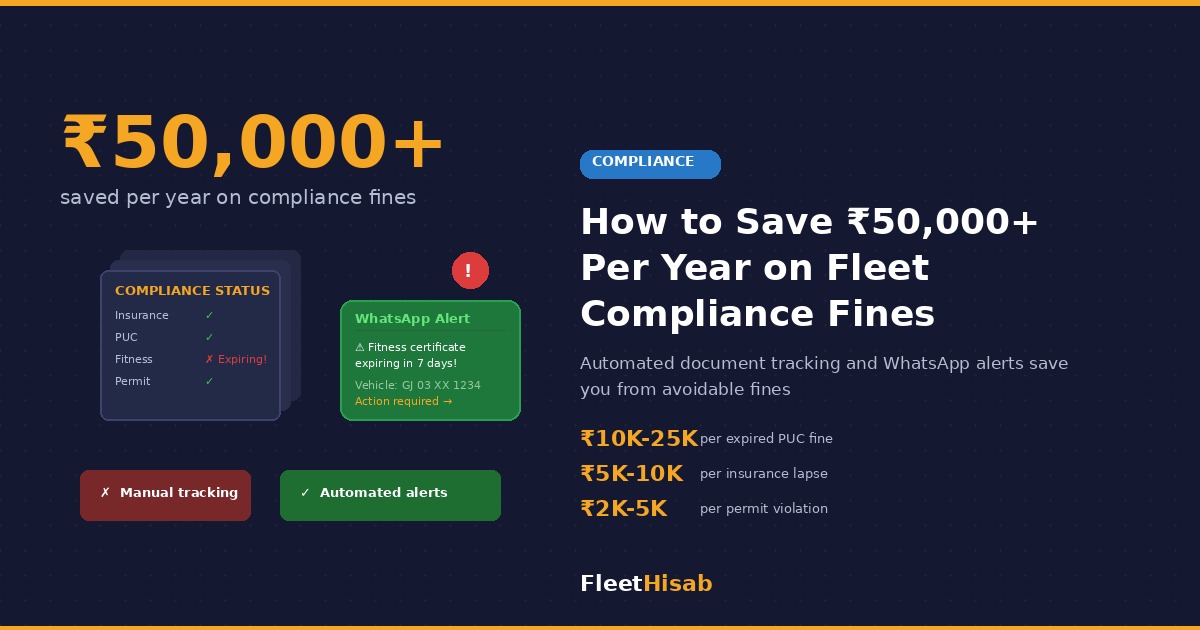
Every fleet owner in India knows the sinking feeling: a truck gets stopped at a checkpoint, and the driver calls to say the PUC certificate expired last week. The fine? ₹10,000 under the Motor Vehicles Act, 2019. Multiply that across a fleet of 10-15 trucks, and you are looking at lakhs of rupees lost every year to completely avoidable penalties.
According to data from the Ministry of Road Transport and Highways, over 60% of commercial vehicles on Indian roads have at least one expired compliance document at any given time. The most common offenders are PUC certificates, insurance policies, and fitness certificates.
For every commercial vehicle registered in India, fleet owners must keep the following documents current:
Let us break down the numbers for a typical fleet of 10 trucks:
That means a fleet owner can easily lose ₹2-3 lakh per year in fines and lost business.
The solution is simple: track every document expiry date and renew before it lapses. But with 6+ documents per truck and 10+ trucks in a fleet, that is 60+ dates to remember. No wonder things slip through the cracks.
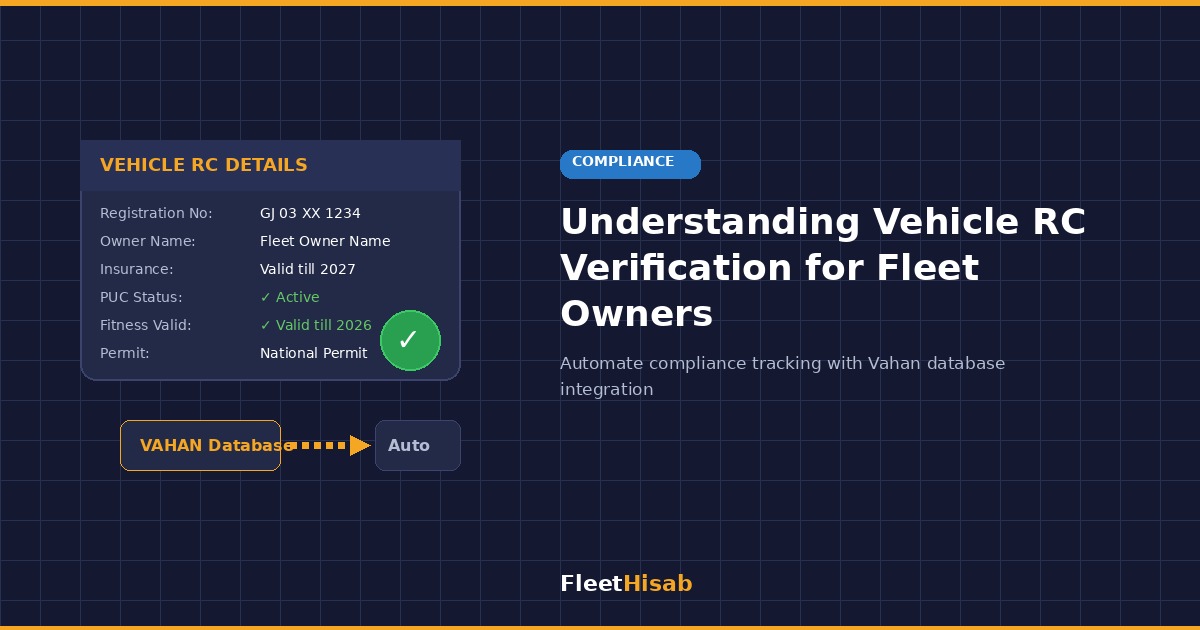
Stop using paper diaries or Excel sheets. A digital system that stores all expiry dates in one place and is accessible from your phone makes a huge difference. FleetHisab automatically fetches expiry dates from the government Vahan database when you add a truck.
The key is getting timely reminders. FleetHisab sends WhatsApp alerts at three stages:
A colour-coded dashboard showing green (valid), yellow (expiring soon), and red (expired) status for every document across your entire fleet. One glance tells you exactly which trucks need attention.
Instead of manually entering dates, FleetHisab pulls the latest data from the government Vahan/Surepass API every week. If a document gets renewed, the system automatically updates the expiry date and resets the alert cycle.
Rajesh Patel from Ahmedabad manages a fleet of 12 trucks. Before using FleetHisab, he was paying an average of ₹80,000 per year in compliance fines. After switching to automated tracking:
Do not wait for the next ₹10,000 challan to start tracking your compliance documents. Download FleetHisab, add your trucks using their registration numbers, and the app will automatically fetch all document expiry dates from the government database. Setup takes less than 5 minutes per truck.
Start saving money today. Your fleet deserves smart compliance management.